Argon ions boost key characteristic of electrodes for energy storage devices by factor of 5
December 1, 2025
subscription
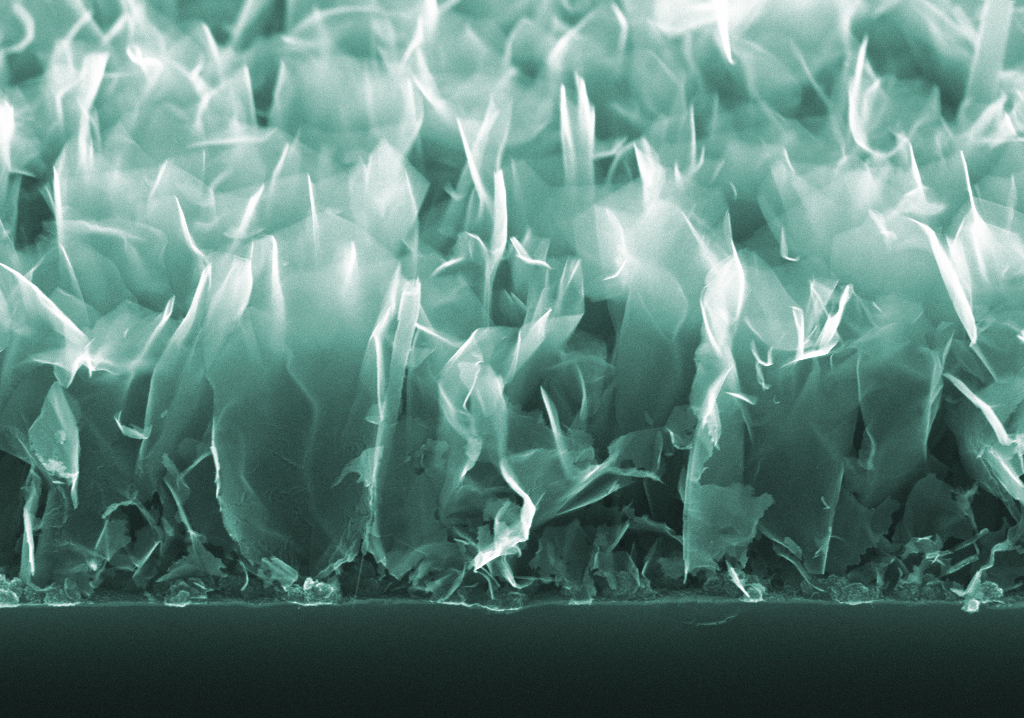
Image. Colored photograph obtained via scanning electron microscopy depicting carbon nanowalls. Credit: Stanislav Evlashin

Researchers from Skoltech, MIPT, and the RAS Institute of Nanotechnology of Microelectronics have achieved a fivefold increase in the capacitance of carbon nanowalls, a material used in the electrodes of supercapacitors. These are auxiliary energy storage devices used in conjunction with conventional accumulators in electric cars, trains, port cranes, and other systems. A key characteristic for these devices, the capacitance of carbon nanowalls could be enhanced by treatment with an optimal dose of high-energy argon ions. The research was published in Scientific Reports and was supported by the Russian Science Foundation.

Unlike conventional energy storage, such as lithium-ion batteries, supercapacitors can accumulate or release energy almost instantaneously, making them perfect for delivering quick bursts of power, when a car moves from standstill, a machine lifts a massive weight, or there is a sudden surge in demand on the power grid. When extra energy is dissipated, as in electric train braking, a supercapacitor can capture it for future use. Compared with lithium-ion batteries, supercapacitors can operate in a broader temperature range, are less susceptible to wear and tear, pose fewer fire hazards, and are easier to recycle. Combining the two technologies extends the service life and enhances the charging speed of lithium-ion batteries.

“The more energy supercapacitors can store, the more applications they will find. We are investigating ways to improve their characteristics by various treatments of the carbon material used in their electrodes,” says the study’s principal investigator, Assistant Professor Stanislav Evlashin of Skoltech Materials. “Earlier this year we showed that capacitance can be enhanced by incorporating atoms of other elements into carbon nanowalls. This time we have achieved a more pronounced increase in capacitance by treating that carbon-based material with argon ions at an ion accelerator. We determined which dose of ions is optimal for maximizing useful defects without damaging the material too much.”

subscription
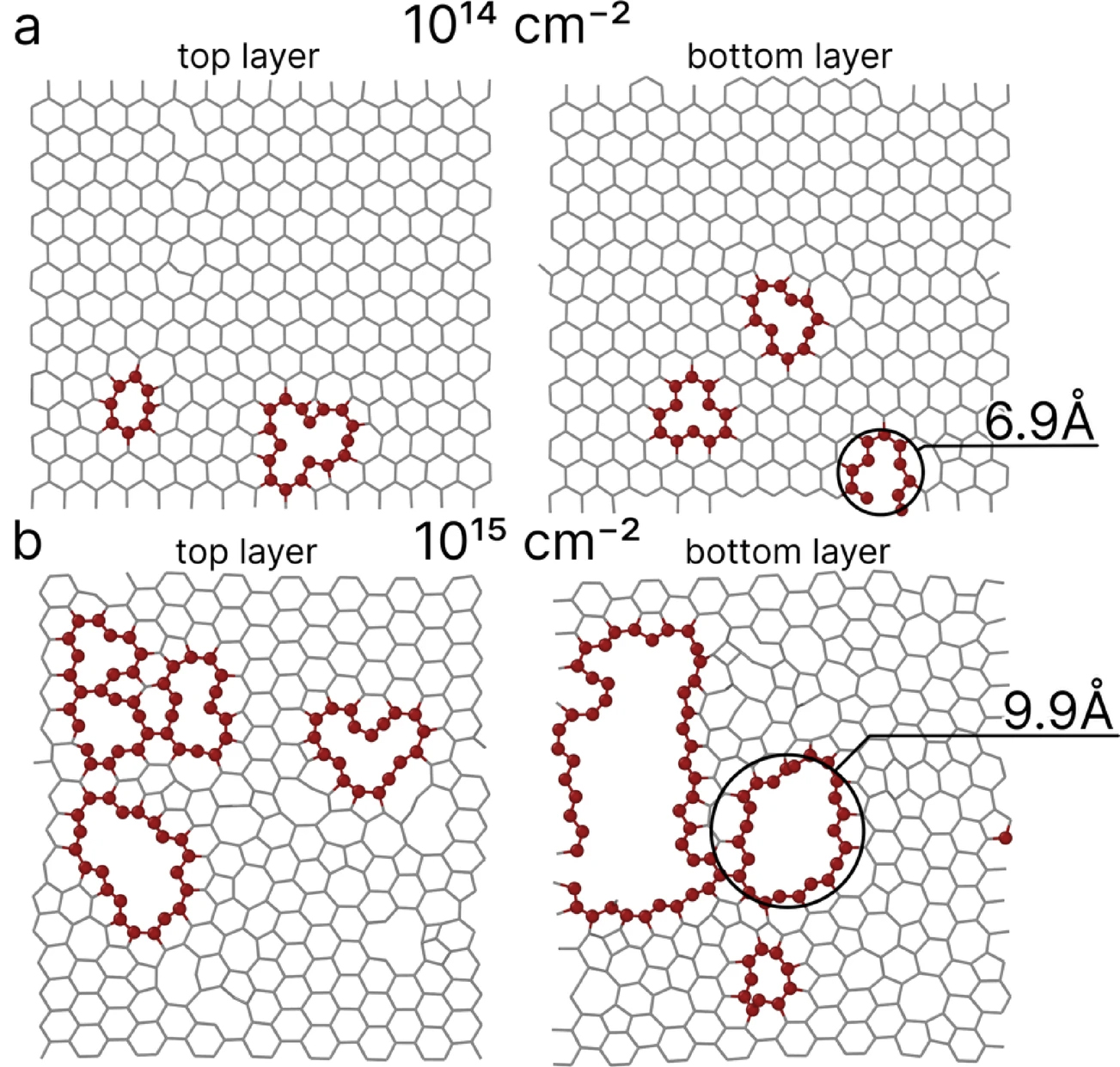
Image. Defects in carbon nanowalls created under optimal (top row) and excessive (bottom row) ion treatment. Credit: Julia Bondareva et al./Scientific Reports

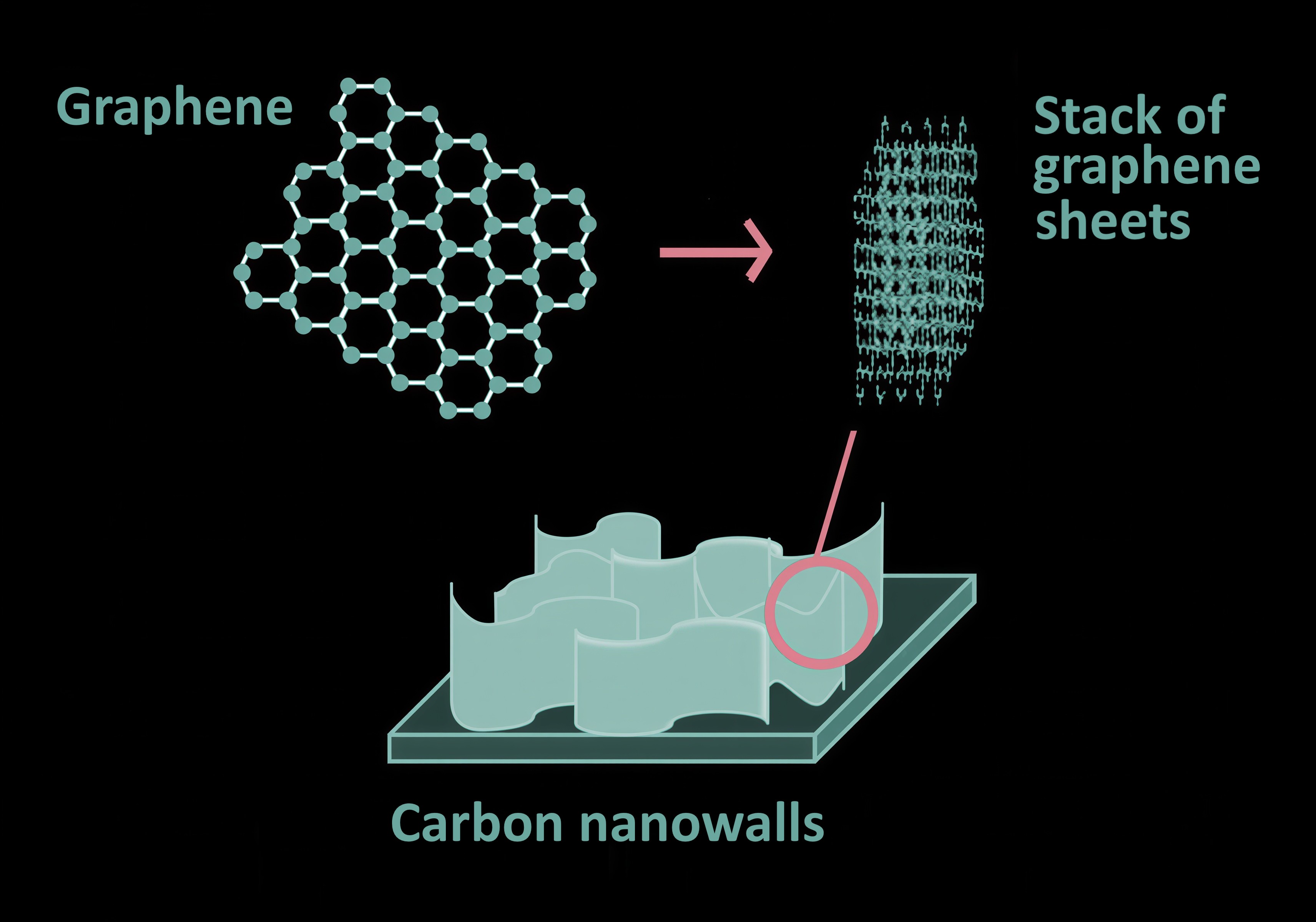
Carbon nanowalls can be visualized as vertically oriented stacks of about 10 to 15 graphene sheets.

subscription
Image. Carbon nanowalls. Credit: Skoltech PR

Owing to their structure, the surface area of carbon nanowalls per unit volume is large, which translates into a high specific capacitance of the power sources using that material. To further boost their characteristics, carbon nanowalls were subjected to argon ion implantation, creating additional defects in the material’s structure. As a result of the presence of such defects and their passivation in air by functional groups, the electrochemical characteristics of carbon nanowalls were improved.

Study co-author Nikita Orekhov, the deputy head of the Computational Materials Design Laboratory at MIPT, commended: “Atomistic modeling on a supercomputer enabled us to identify the specific structural changes in carbon nanowalls following their exposure to varying doses of ion irradiation. As it turned out, at optimal doses of around 10¹⁴ ions per square centimeter, defects of a particular kind — nanosized cavities — form in the material. Because electrolyte molecules have nanoscale dimensions, they can embed themselves into these cavities. This means the material is characterized not only by a large specific surface area but also by nanostructuring of the kind that further increases capacitance.”

According to the authors of the study, ion implantation is a tried and tested technology actively employed in microelectronics to activate silicon. It can now contribute to the creation of advanced current sources. Activation by ion treatment makes sense even for carbon material that is of a very high quality to begin with. Notably, such treatment allows carbon material to be improved in bulk rather than in a thin surface area, because of the ions’ high penetrating capacity. “Compared to heteroatoms, which we embedded into carbon nanowalls earlier, defects are easier to introduce, so instead of a thin activated layer you can obtain such ‘activated carbon’ literally by the bucketful,” Evlashin added.

subscription
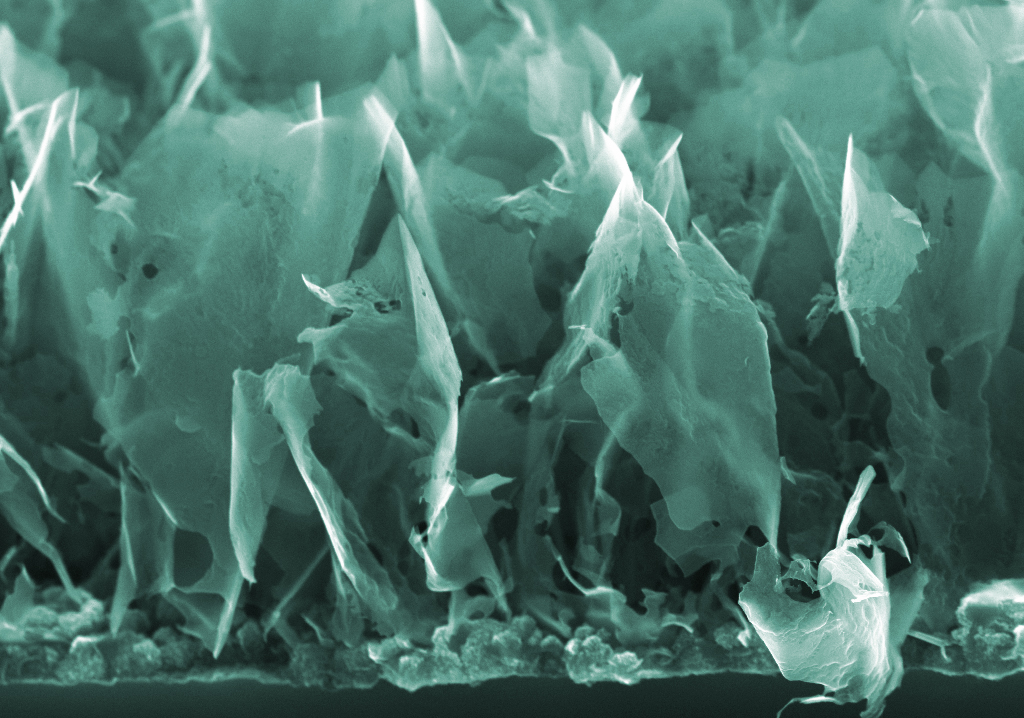
Image. Colored photograph obtained via scanning electron microscopy depicting carbon nanowalls. Credit: Stanislav Evlashin