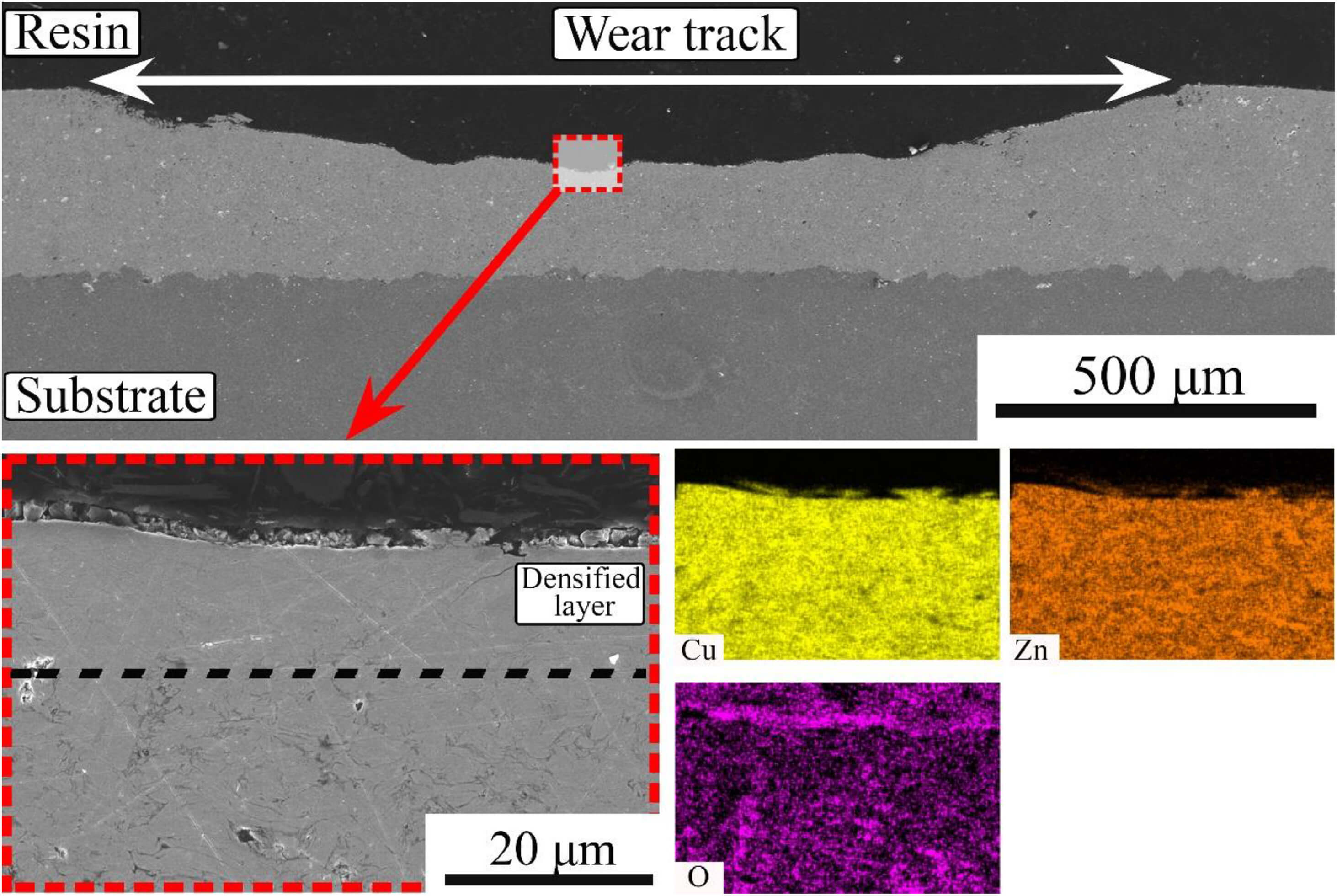
Researchers from Skoltech — a VEB.RF group institution — have for the first time deposited a brass-based composite coating with reinforcing particles on a stainless steel part using low-pressure cold spraying. That technique is cheaper than currently used alternatives, less harmful to the environment, and is uniquely adaptable to repair works at infrastructure facilities out in the field by mobile maintenance teams. Brass coatings are used to extend the service life of bearings and other metal parts subjected to friction in manufacturing, aviation, marine and railroad engineering applications, on drilling rigs and pipelines. The study was published in the journal Results in Engineering.
Brass coatings enhance the operational longevity of metal parts by protecting them against friction, vibrations, and corrosion. Such coatings are used for safeguarding aircraft and marine vessel parts, the fixtures and joints that hold together pipeline segments, drilling pipes, and railways, as well as bushings, rollers, and other industrial machinery components exposed to constant friction.
The principal ways for depositing these coatings are known as electroplating and high- or low-pressure cold spraying. Electroplating involves submerging the metal part into a solution held by a massive bath and passing electrical current through it. Such expensive and bulky equipment is only available in an industrial or laboratory setting, and the environmental impact is great due to the toxic chemicals contained in the electrolyte solution.
High-pressure cold spraying also relies on equipment that is fairly expensive and not easy to move around. Deposition occurs at a temperature and pressure high enough for copper and zinc particles to smash into the surface of the metal part and bond to it upon impact. However, the heat of this process means there is a greater risk of compromising the integrity of the original metal part or oxidizing the brass coating.
Not so for low-pressure cold spraying. Yet it has not been used so far to deposit brass-based composite coatings, because this technique could not produce a sufficiently homogeneous coating. With some regions getting more copper and others ending up zinc-rich, the resulting layer of metal was more of a zinc-copper mixture rather than a true alloy, leading to compromised performance. Now, Skoltech researchers from the Materials Center’s Laboratory of Thermal Spray and Functional Coatings have resolved this issue and unlocked the potential of the previously unavailable deposition technique, which has a range of advantages.
“What enabled us to produce a homogeneous brass coating was source material preprocessing,” the study’s lead author and Skoltech PhD student from the Institute’s Mathematics and Mechanics program Irina Tumbusova commented. “Normally, the feedstock in the cold spray process would be a mixture of three powders: copper, zinc, and some reinforcing additive, such as alumina. In our case, however, copper and zinc powders were subjected to mechanical alloying before spraying, so the deposited material was a brass alloy to begin with.”
Mechanical alloying refers to a solid-state powder processing method that uses a high-energy ball mill to homogenize blended elemental powders — in this case copper and zinc — through repeated cold welding, fracturing, and rewelding of the particles.
The feedstock preprocessing proposed by the Skoltech team enables engineers to tap into the potential of low-pressure cold spraying. This makes it possible to deposit brass coatings in a way that does less harm to the environment, while also diminishing the risk of overheating the steel parts and oxidizing brass, thanks to the lower operating temperature. Besides that, the technique is less costly than the alternatives, because it relies on simpler and more compact equipment. The latter is also transportable, so mobile repair crews can conduct maintenance on location by redepositing worn-off coatings at industrial and infrastructure facilities.