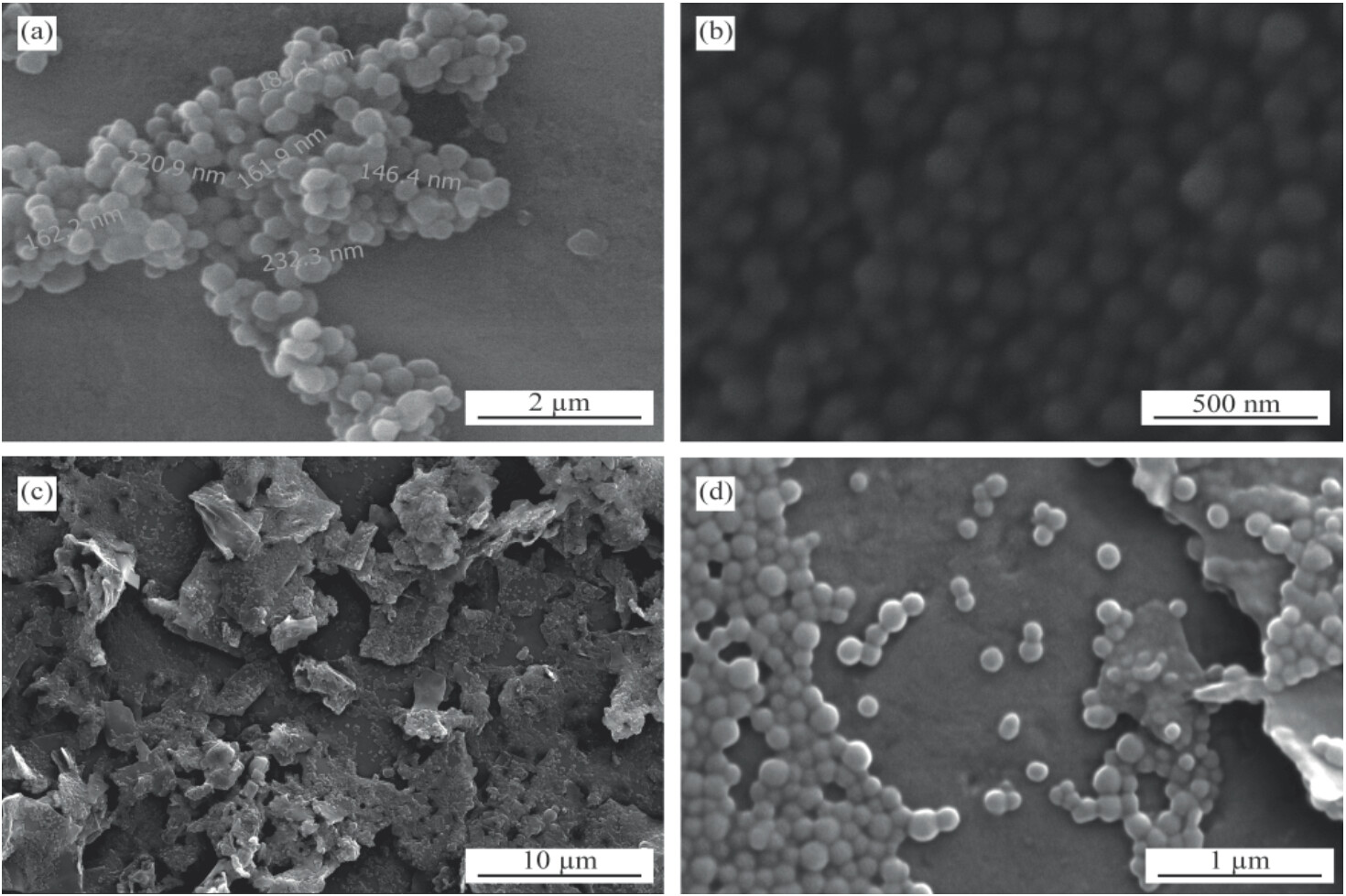
In an unlikely collaboration between Skoltech’s Petroleum Center and the drug delivery team from the Institute’s Neuro Center, researchers have proposed new surfactants that enhance oil recovery when pumped into a well, along with a novel way to increase the efficiency of such chemical agents. Borrowed from medicine, the approach involves encapsulating the surfactant molecules in nanoparticles of silicon dioxide. The study came out in the journal Advances in Geo-Energy Research and was selected as a cover article.
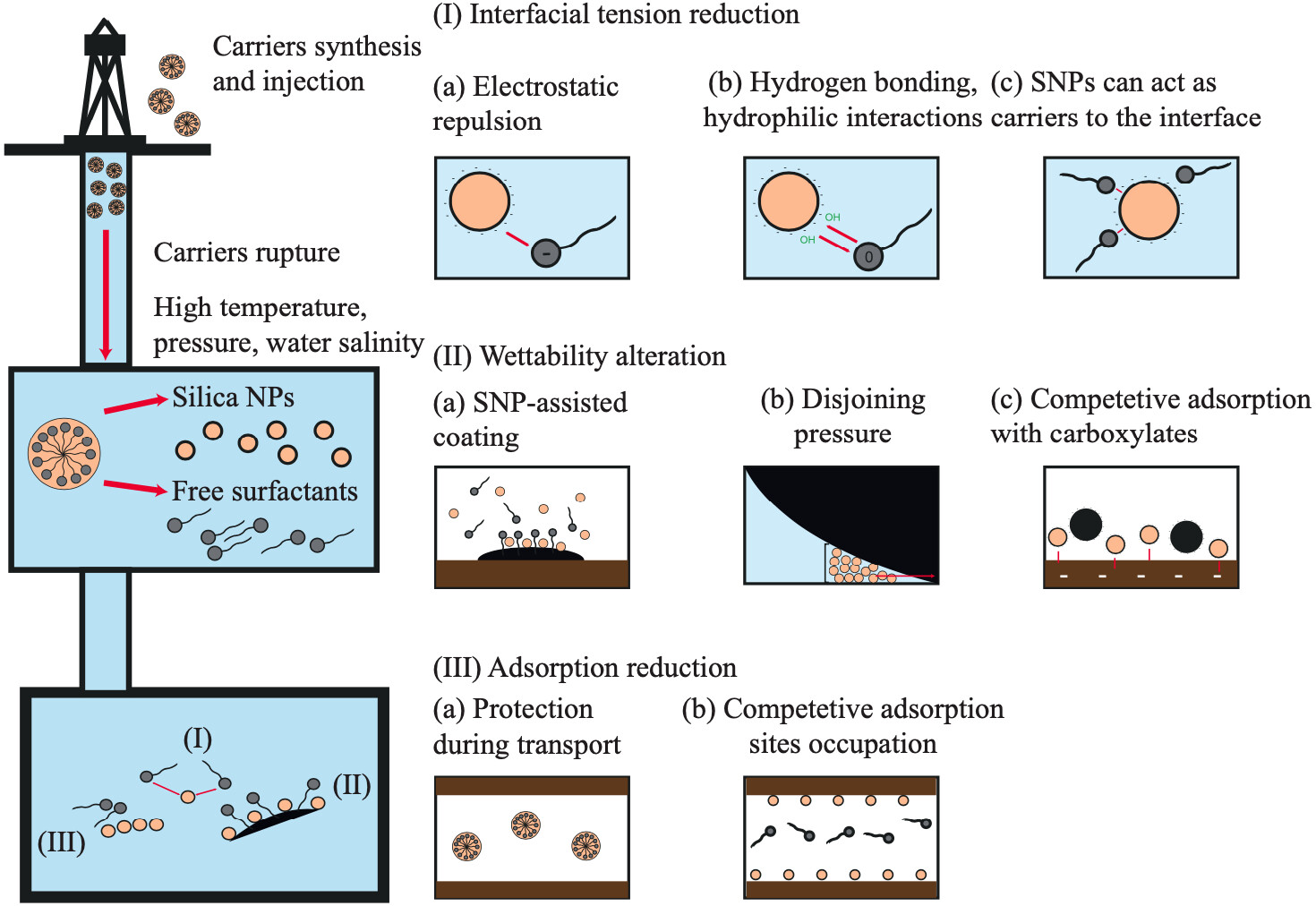
Surfactants are crucial chemical agents for enhanced oil recovery. When injected into the well in water solution, they help free up trapped oil by reducing oil-water interface tension, making the rock surface more “water-friendly,” and generating foam — along with gas injection — for better fluid mobility. The recent Skoltech study provides a way to improve these useful properties of existing surfactants, as well as proposing new ones.
“Borrowed from drug research, the notion of encapsulating chemicals for targeted delivery is fairly new to the field of enhanced oil recovery,” said Skoltech PhD student Arsenii Chekalov from the Petroleum Engineering program, the lead author of the study. “The two surfactants investigated in this study have not been studied in detail or encapsulated before. The mesoporous silica nanocarriers that we used for encapsulation have received comparatively limited attention in enhanced oil recovery, with most studies focusing on other delivery systems. Importantly, our study shows a synergy between the disintegrated silica capsules and the surfactants following their release.”
In the team’s experiments on real oil-bearing rock samples, the new surfactants exhibited decent performance based on multiple properties key to their function: First, the rate of surfactant adsorption to rock is fairly low, which means less surfactant per gram of rock will be lost, so more of it can make its way further into the rock. Second, the tension at the interface between water and oil is reduced. Third, the wettability of carbonate rock by water is increased, making it easier for water to displace oil. On all three counts, silica nanoparticles enhanced the effect of the surfactant.
An additional feature that makes the two surfactants — technically known as anionic alkyl ether carboxylate and nonionic alkyl polyglucoside — promising is their good performance in high-temperature and high-salinity environments, regardless of encapsulation.
Assistant Professor Chengdong Yuan from Skoltech Petroleum, the principal investigator of the study, commented: “We obtained very encouraging results clearly demonstrating that encapsulation can enhance oil displacement efficiency through synergistic interfacial mechanisms. At the same time, this work represents only an initial step. Future research should focus on evaluating encapsulated surfactant systems under dynamic flow conditions representative of real reservoir operation, including core flooding experiments and controlled release studies. Such investigations will be essential for tailoring the technology to different reservoir types and making it more flexible and robust for practical field deployment.”