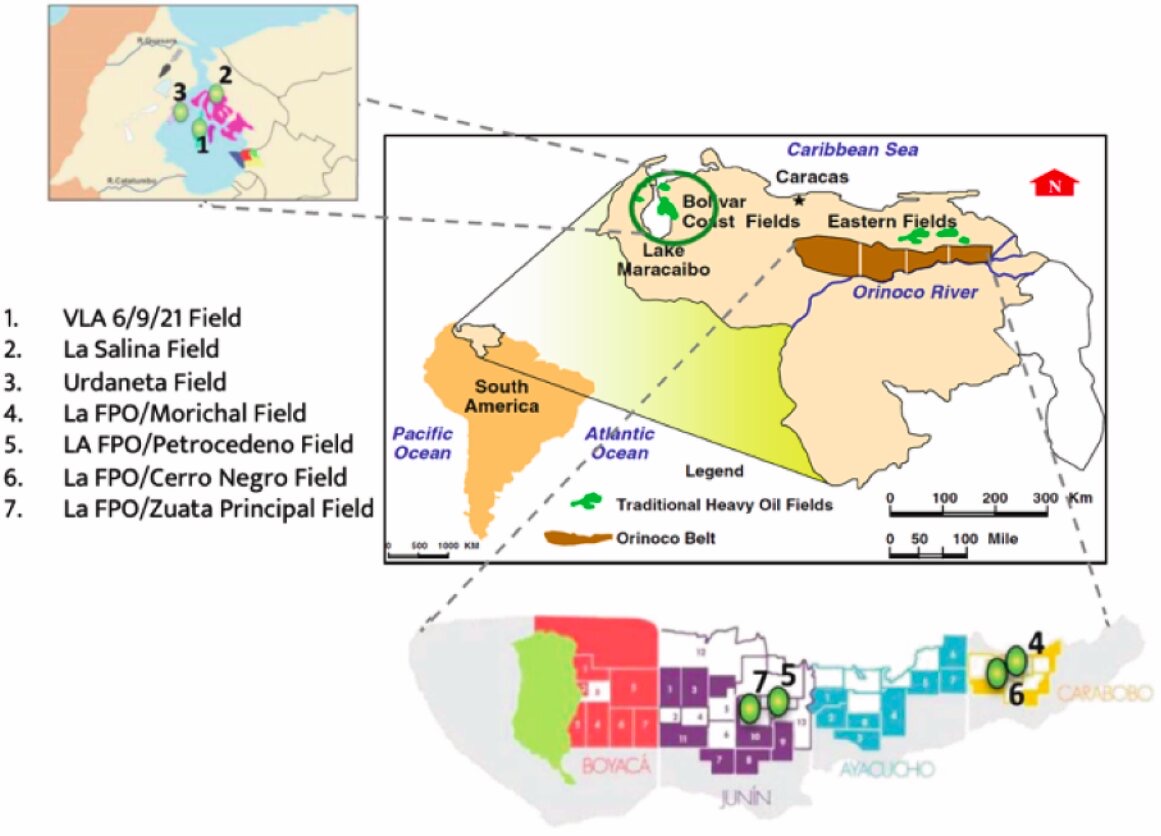
Researchers from Skoltech — a VEB.RF group institution — and Khalifa University of Science and Technology, together with their Venezuelan colleagues in the oil industry, have built a verified numerical model that will refine predictions of how effective enhanced-oil-recovery methods can be at Venezuela’s extra-heavy oil fields. Reliable forecasts will enable companies to make sound decisions when developing these fields. The study was published in the journal Fuel.
Venezuela holds vast reserves of extra-heavy oil, but extracting it is extremely difficult. While a typical recovery factor runs around 60% for light oil and up to 20% for heavy oil, the extra-heavy oil field analyzed by the Skoltech-led team has a recovery factor of just 4%. This is due to the oil’s high viscosity and other features that work against extraction. Without a substantial boost in recovery, such reserves are practically out of reach.
Prior assessments have already considered the potential of enhanced-oil-recovery methods for developing Venezuelan fields. The focus was on thermal techniques — that is, hot steam injection and in-situ combustion — and the deployment of various industrial chemical agents. However, because the fields in question are characterized by thin oil-bearing formations that contain heterogeneous, heavily watered-out zones, applying these methods remains technically challenging. The research team proposed an alternative approach that combines two chemical recovery methods but does not use alkalis, which are harmful to the environment.
“There are many ways to squeeze the most out of a well,” explains the study’s lead author, Senior Research Scientist Aysylu Askarova from Skoltech Petroleum. “Water is injected to raise pressure in the formation, but it does not address the viscosity of extra-heavy oil. For that, heat is ordinarily deployed, but hot-steam injection is hampered by this particular field’s characteristics, and in-situ combustion remains at the laboratory-research stage for fields like this one. That’s where chemical agents come in: alkalis, surfactants, polymers. Each type of agent can be used on its own or they can be combined, with different effects depending on which sequence you choose.”
Although chemical methods free of alkalis remain little studied, the researchers chose to leave out this component to reduce the risk of corrosion, scale buildup, polymer instability, and the formation of emulsions that are difficult to separate. With the remaining two components, the order of injection can vary: either polymer comes first, followed by the surfactant, or vice versa, or they can be introduced into the well simultaneously.
“It’s hard to compare these options ahead of time. The number of physical experiments you can run is limited by the availability of real rock samples from the relevant fields — such samples are very scarce — as well as by how time-consuming and expensive these tests are,” Askarova says. “So we built a numerical model, verified against experimental data from our Venezuelan colleagues, that enables further numerical experiments producing reliable forecasts without the need for new samples.”
The model was calibrated to reproduce the results of three experiments using samples similar to the field’s rock, plus one experiment using an actual core sample recovered during drilling. In these experiments, both reagents — surfactant and polymer — were injected into the rock.
The researchers’ model was combined with the oil company’s overall hydrodynamic field model, endowing the combined model with the capacity to draw comparisons between a full range of enhanced-oil-recovery scenarios, including the deployment of nonchemical methods such as in-situ combustion and hot water or steam injection, which were not examined in the study.
As for the three competing scenarios of alkali-free polymer and surfactant injection, the numerical experiments showed that introducing both reagents simultaneously yields the best result: The recovery factor is projected to triple, reaching 12%, a considerable gain for such a challenging field, though it’s still too early to say with confidence whether extraction under such conditions would be economically viable.
While new sites will require recalibrating the model to account for local oil properties, mineralogy, water salinity, reagent adsorption, and filtration characteristics, the model could eventually be adapted for rapid screening of enhanced-oil-recovery methods at other extra-heavy fields — not just in Venezuela, but in China, Canada, Oman, and elsewhere. Using the model would help oil companies forecast the effectiveness of enhancement measures and assess their economic feasibility.