Skoltech showcases its achievements at the Future Technologies Forum in Moscow
February 25, 2026

On February 25-26, Skoltech (part of the VEB.RF group) is participating in the Future Technologies Forum in Moscow — a flagship event attended by Russian President Vladimir Putin, dedicated to the development of technologies in Russia and the discussion of cutting-edge scientific research and product solutions based on them. This year’s key theme is bioeconomics for human well-being. In the forum’s exhibition area, at the Moscow Government booth, the Institute is presenting two projects.

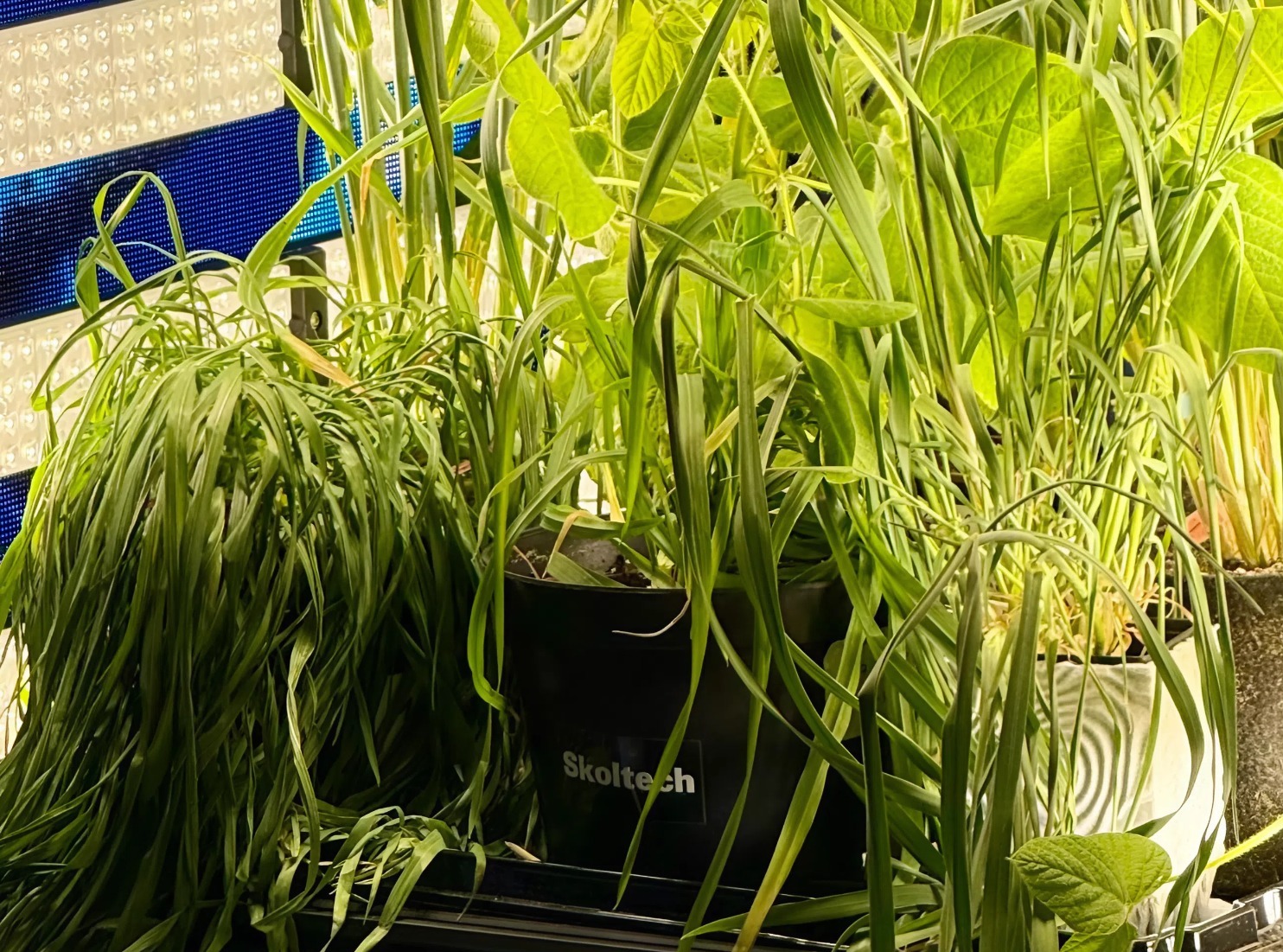
Professor Elena Potokina, the head of research in agrobiotech at the Biomed Technologies Center, and her research team and her team are showcasing new wheat lines that could pave the way for more productive hybrids. Normally, producing a hybrid requires manually removing stamens from wheat flowers — otherwise the plant self-pollinates and no hybrid is formed. It’s a painstaking and costly process. Skoltech’s innovation offers a solution: The new wheat lines become sterile — unable to self-pollinate — at specific temperatures. This makes hybrid production simpler, faster, and cheaper, bringing high-yielding varieties closer to widespread use.

subscription

For the first time in Russia, the researchers have obtained T0 mutants of the thermosensitive genetic male sterility (TMS) gene in wheat using CRISPR-Cas9, biolistic transformation, and tissue culture — specifically modifying the TGMS5 gene. At temperatures below 22°C, the plants remain fertile; above 28°C, they function as female forms, enabling controlled cross-pollination without manual intervention. The technology offers over 99% hybrid seed purity, reduced production costs, elimination of manual operations, and expanded opportunities for breeding new high-yielding hybrids.

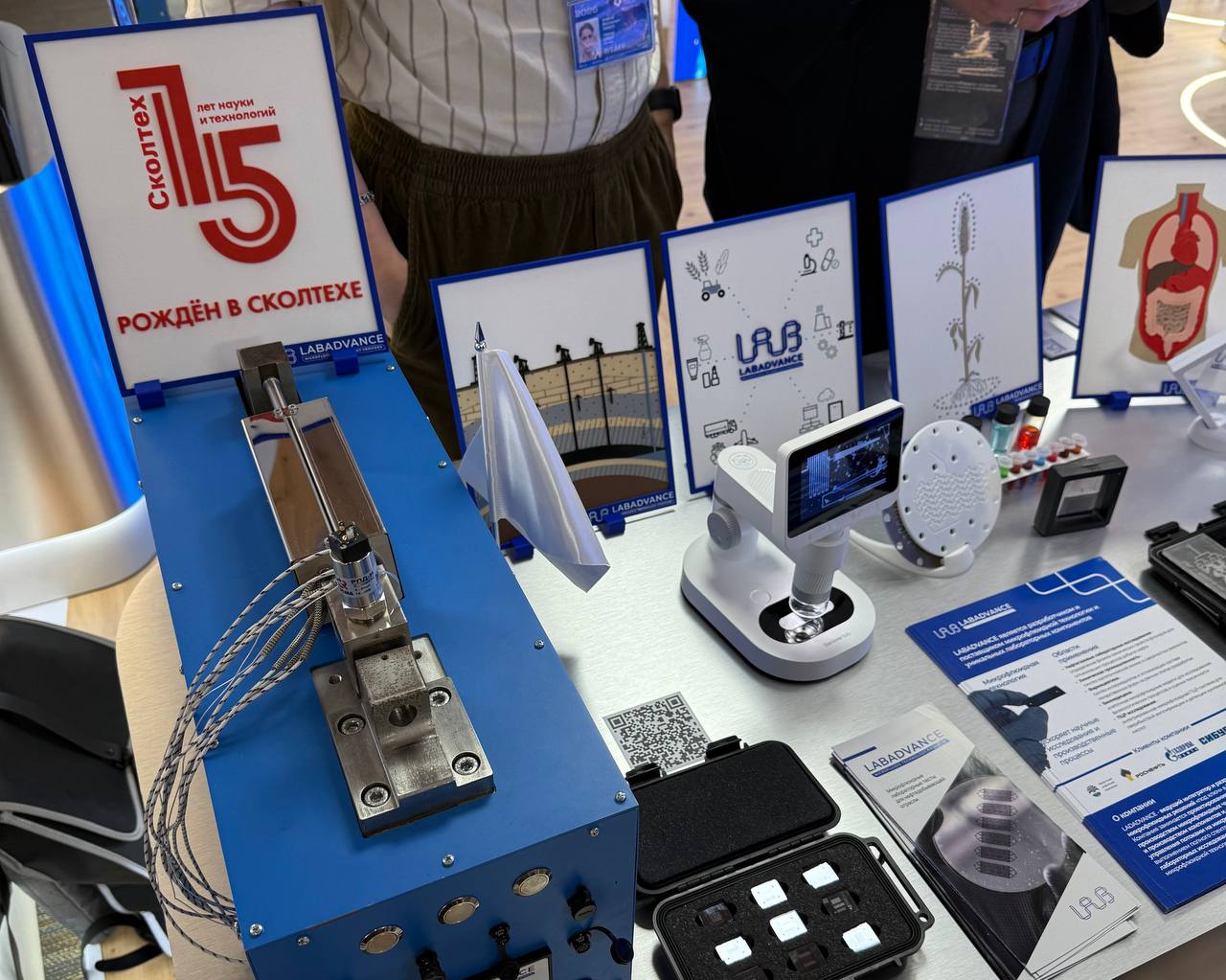
The Skoltech-born Labadvance startup is presenting microfluidic solutions for biomedicine. Its organ-on-a-chip systems enable precise drug testing directly on human cells, significantly cutting both the time and cost of drug development. As a critical cross-cutting technology, microfluidics opens up broad applications beyond medicine — from reservoir-on-a-chip for visualizing processes in porous media to improve oil recovery, to flow synthesis that reduces waste and increases target product yields. Advancing this field at Skoltech in collaboration with Labadvance will be an important step in building engineering infrastructure and strengthening competencies in microfluidics.

subscription

“Bioeconomics is one of Russia’s strategic priorities and an integral part of ensuring its national security. At Skoltech, this is a key focus area: Our research teams address food security challenges — for example, developing solutions for growing crops in harsh climates. In biomedicine, Skoltech scientists create smart particles and microcapsules for targeted drug delivery directly into cells. Bioeconomics also emphasizes nature-inspired technologies that mimic or harness the properties of living systems. Skoltech is advancing such fields as well: Studying diatoms could one day inspire the design of exoskeleton structures for high-performance engineering devices,” noted Skoltech Interim President Alexander Safonov.